
Sauna Electrical Requirements: Your Complete Home Guide


"Will my current electrical system support a sauna?" It's one of the most frequently asked questions we hear at Eden Hut, and honestly, it's the right question to ask. Understanding your home sauna electrical requirements isn't just about technical specifications—it's about ensuring safety, avoiding costly surprises, and making sure your investment works properly from day one.
This article will help you understand exactly what's required electrically for different types of saunas in a home environment. We'll break down the requirements for each heater type, explain whether your standard household electrical system can support them, and clarify what adaptations you might need. By the end, you'll know precisely what your sauna needs and what steps to take next.
Here’s a clear overview of each sauna type, its power requirements, and what you can expect in terms of setup and cost:
Traditional Electric Sauna Heater Requirements
Traditional electric heaters are the powerhouses of the sauna world. They heat sauna stones to high temperatures, creating that authentic, intense dry heat that sauna enthusiasts love. This performance comes with substantial electrical demands.
Voltage Requirements: 240V (also called 220V—they're effectively the same for residential purposes)
This is double the voltage of standard UK household outlets. Your regular plug sockets won't work for traditional sauna heaters—they require a completely different electrical setup.
Amperage Requirements:
- 4.5kW heater: 30-amp dedicated circuit
- 6kW heater: 30-amp dedicated circuit
- 7.5kW heater: 40-amp dedicated circuit
- 8kW heater: 40-amp dedicated circuit
- 9kW heater: 50-amp dedicated circuit
The larger your sauna, the more powerful the heater you'll need, which directly affects the amperage requirement.
Wire Gauge Specifications:
- For 30-amp circuits: 10mm² cable (10/2 wire in US terminology)
- For 40-50 amp circuits: 16mm² cable (8/2 wire in US terminology)
- If your sauna is more than 9 metres from your consumer unit, you may need to increase wire gauge to compensate for voltage drop
Circuit Breaker: Must be a double-pole breaker matched to your heater's amperage. This means if you have a 6kW heater requiring 30 amps, you need a 30-amp double-pole breaker dedicated solely to your sauna.
Take a look at our range of Sauna + Hot Tub Combo options
Can Your Standard Household Support This?
Short answer: Possibly, but it depends on your home's total electrical capacity and current usage.
Most modern UK homes have a 100-amp main service. Older homes might have 60-amp or 80-amp service. To add a sauna, you need available capacity in your consumer unit (fuse box) for the additional circuit.
Here's how to think about it: If your home has a 100-amp service and you're already using 70-80 amps for everything else (heating, cooking, lighting, appliances), adding a 40-amp sauna could overload your system.
What you need to do:
- Check your consumer unit capacity: Look at the main breaker—it should state the amperage (60A, 80A, 100A, etc.)
- Calculate current usage: Add up the amperage of all your existing circuits. Your electrician can do this quickly.
- Determine if you have capacity: Generally, you shouldn't load your system beyond 80% of its rated capacity. So a 100-amp service should handle about 80 amps of total load.
If you DON'T have capacity:
You'll need a consumer unit upgrade. This typically costs £800-1,500 and involves:
- Installing a larger consumer unit (upgrading from 60A to 100A, for example)
- Potentially upgrading the service cable from the meter
- Ensuring all connections meet current regulations
- Having the work certified and inspected
This sounds daunting, but it's relatively common, and many homes benefit from the upgrade anyway as it provides capacity for future needs like electric vehicle chargers or heat pumps.
If you DO have capacity:
Your electrician will:
- Install a new dedicated circuit from your consumer unit
- Run appropriate gauge cable to your sauna location
- Install a double-pole breaker rated for your heater
- Add a disconnect switch near the sauna (required by code)
- Ensure all connections are properly grounded
- Test and certify the installation
Cost for this work typically ranges from £400-1,200 depending on distance from consumer unit to sauna and complexity of the cable run.
Our honest take: We've seen many clients hesitate when they discover their home needs a consumer unit upgrade. But here's what we've learned—those who go ahead rarely regret it. Yes, it adds £800-1,500 to your initial investment, but you gain electrical capacity that benefits your entire home. And frankly, if your home is still on a 60-amp service, that upgrade was probably needed eventually anyway. The sauna just becomes the catalyst for a beneficial home improvement.
Wood-Burning Sauna Heater Requirements
Wood-burning saunas represent the opposite end of the electrical spectrum—they have minimal electrical needs because the heat source is wood, not electricity.
Voltage Requirements: Standard 230V household circuit
Amperage Requirements: 5-10 amps maximum
What Actually Needs Electricity:
- Lighting (typically LED sauna lights)
- Any additional outlets you might want for accessories
- That's essentially it
Circuit Requirements: A standard household circuit is usually sufficient. However, we still recommend a dedicated circuit to ensure your sauna lighting doesn't share power with other rooms or appliances that might trip breakers.
Wire Specifications: Standard 1.5mm² or 2.5mm² cable (same as regular household circuits)
Can Your Standard Household Support This?
Answer: Yes, absolutely.
Any home with standard electrical service can support a wood-burning sauna's electrical needs. You're essentially just adding some lights, which draw minimal power.
What you need to do:
Your electrician will:
- Run a standard circuit from your consumer unit (or potentially from a nearby circuit if code allows)
- Install a standard breaker (usually 10-16 amps)
- Wire the sauna lights and any outlets
- Ensure proper grounding
This is straightforward electrical work, similar to adding lights to a garden shed. Cost is typically £200-500 depending on cable run distance.
Important note: While the electrical requirements are minimal, wood-burning saunas have OTHER requirements:
- Proper chimney installation with appropriate clearances
- Adequate ventilation
- Fire-resistant flooring and clearances around the stove
- Potentially planning permission depending on your area
- Regular chimney cleaning and maintenance
The simplicity of the electrical requirements doesn't mean the overall installation is simple—it just shifts the complexity to other areas.
.jpg)
Infrared Sauna Power Requirements
Infrared saunas are the most electrically efficient sauna type. They use infrared panels to heat your body directly rather than heating the air, which requires significantly less power than traditional electric heaters.
Small Infrared Saunas (1-2 person):
Voltage Requirements: Standard 230V household circuit
Amperage Requirements: 13-15 amps
Power Draw: 1.5-2kW typically
Plug Type: Standard 13-amp UK plug
Circuit Requirements: Can use a standard household circuit, BUT it should be a dedicated circuit. Don't share this circuit with other high-draw appliances.
Can Your Standard Household Support Small Infrared Saunas?
Answer: Yes, easily.
Small infrared saunas can literally plug into a standard UK socket. However, for safety and optimal performance, that socket should be on its own dedicated circuit—meaning nothing else is plugged into other outlets on that same circuit.
What you might need:
If you don't have a conveniently located outlet on a dedicated circuit, your electrician should:
- Install a new dedicated circuit from your consumer unit
- Run 2.5mm² cable to your sauna location
- Install a standard 13-16 amp breaker
- Fit an appropriate socket
Cost: £150-400 depending on distance and accessibility.
Large Infrared Saunas (3+ person):
Voltage Requirements: 230V-240V
Amperage Requirements: 20-32 amps
Power Draw: 3-6kW typically
Circuit Requirements: Dedicated hardwired circuit (no plug—directly wired)
Wire Specifications: 4mm²-6mm² cable depending on amperage
Can Your Standard Household Support Large Infrared Saunas?
Answer: Usually yes, without needing a consumer unit upgrade.
Large infrared saunas require more power than small ones but still significantly less than traditional electric heaters. Most homes with 80-100 amp service can accommodate them without system upgrades.
What you need:
Your electrician will:
- Install a dedicated circuit with appropriate breaker (20-32 amp)
- Run proper gauge cable (usually 4mm² or 6mm²)
- Hardwire the sauna (no plug connection)
- Install disconnect switch if required
- Ensure proper grounding and code compliance
Cost: £300-800 depending on complexity and distance.
Key Advantage of Infrared:
The lower power requirements mean:
- Easier installation
- Lower installation costs
- Less strain on your home's electrical system
- Lower running costs (infrared saunas use 60-75% less electricity than traditional)
- More homes can accommodate them without upgrades
.jpg)
Read also: Wood-Fired vs Electric Hot Tubs: Choosing Your Path to Wellness
Outdoor Sauna Electrical Requirements
Outdoor saunas follow the same heater-specific requirements we've already covered (traditional electric, wood-burning, or infrared), but they add another layer of consideration: the electrical installation must account for outdoor conditions and the distance from your home.
The Core Requirements Don't Change:
- Traditional electric outdoor sauna: Still needs 240V, 30-50 amps, dedicated circuit
- Wood-burning outdoor sauna: Still needs minimal power, standard circuit
- Infrared outdoor sauna: Still needs 13-32 amps depending on size
What DOES Change:
Cable Type and Protection
Standard indoor cable isn't suitable for outdoor runs. Your electrician must use:
Steel Wire Armoured (SWA) Cable: This is the UK standard for outdoor electrical installations. It has:
- Steel wire armour for physical protection
- Weather-resistant outer sheath
- Protection against moisture, UV, and physical damage
Or Conduit Protection: Standard cable can be used if it's run through proper outdoor-rated conduit:
- Must be waterproof conduit rated for outdoor use
- Properly sealed at all entry/exit points
- Secured to prevent movement or damage
Underground vs Overhead Installation
Underground (Most Common for Gardens):
- Cable must be buried at minimum 450mm depth (600mm if under driveways)
- Should be protected by conduit or use SWA cable
- Must be marked or recorded so future digging doesn't damage it
- Typically adds £15-25 per metre to installation cost compared to indoor runs
Overhead:
- Must be at minimum 3.5 metres height over pathways, 5.2 metres over driveways
- Requires proper support cables and weatherproof fittings
- Less common for residential gardens due to aesthetic concerns
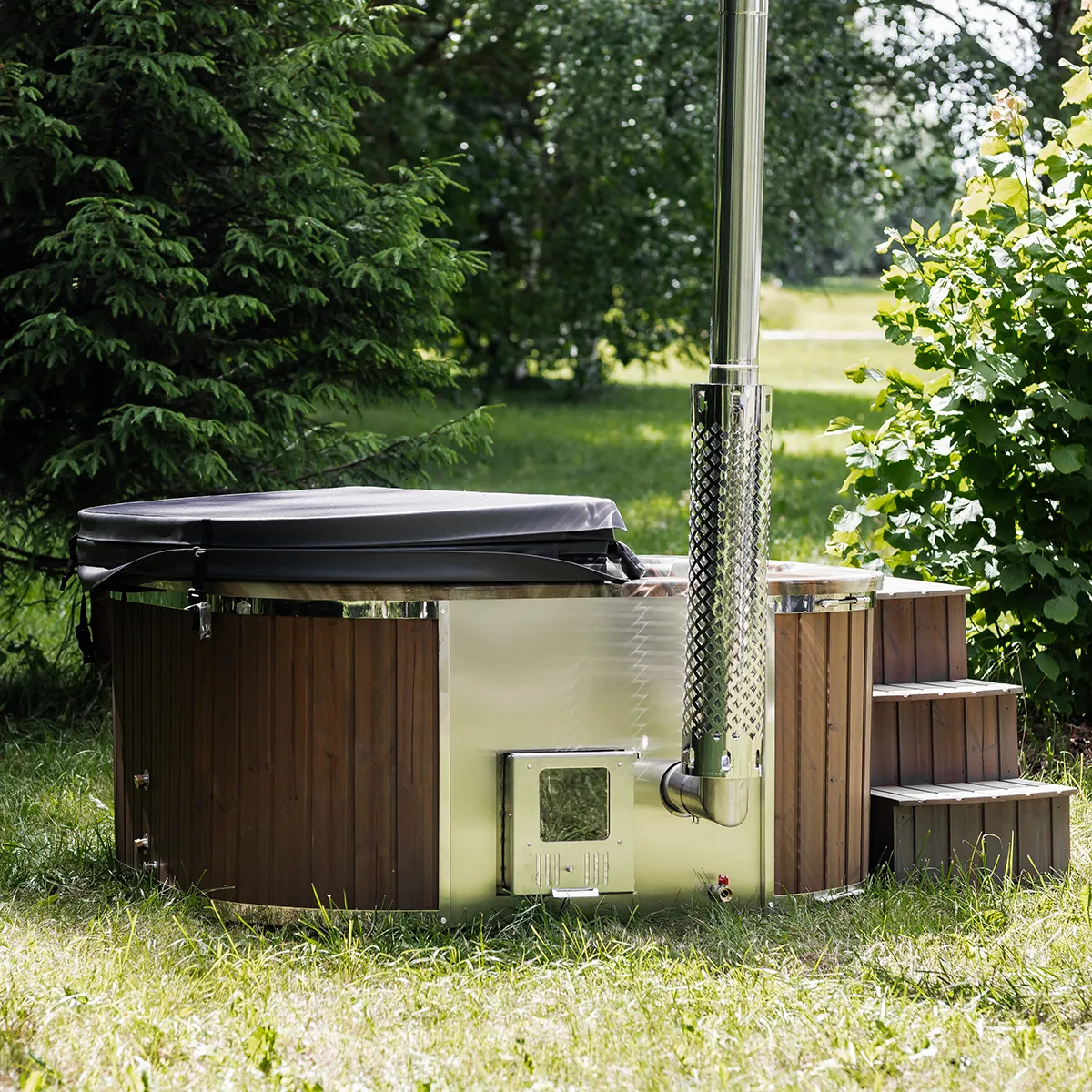
Read our guide to understand the key differences between internal and external hot tub ovens.
Additional Safety Requirements
RCD Protection (Residual Current Device): Absolutely mandatory for outdoor installations. The RCD trips instantly if it detects any current leakage, protecting against electric shock. This is especially critical in outdoor/wet environments.
IP-Rated Components: All external connections, junction boxes, and the disconnect switch must be rated IP65 or higher (weatherproof and protected against water jets and dust).
Proper Disconnect Switch: Must be installed within sight of the sauna, in a weatherproof enclosure. This allows you to safely disconnect power for maintenance.
Cost Implications
Outdoor electrical installation typically costs more than indoor:
For Traditional Electric Outdoor Sauna:
- Indoor equivalent: £400-1,200
- Outdoor addition: Add £300-800 depending on distance
- Total: £700-2,000
The extra cost covers:
- More expensive SWA cable or conduit
- Underground trenching or overhead mounting
- IP-rated disconnect switch and enclosures
- Additional labour for outdoor installation
- Testing and certification for outdoor installation
Distance Matters Significantly:
- Sauna 5 metres from house: Minimal added cost (£200-300)
- Sauna 15 metres from house: Moderate added cost (£400-600)
- Sauna 30+ metres from house: Substantial added cost (£700-1,000+)
Each additional metre of cable run adds cost, and longer runs may require heavier gauge wire to compensate for voltage drop.
Planning Considerations
Before Installation:
- Plan the cable route: Shortest practical path from consumer unit to sauna, avoiding obstacles
- Consider future access: Don't bury cables where you might later install patios, ponds, or structures
- Mark the route: Once installed, mark or map where cables run for future reference
- Allow for sauna positioning: Ensure the electrical entry point on your sauna aligns with where the cable comes up
Common Challenges:
- Established gardens: Trenching through mature landscaping is disruptive (consider off-season installation)
- Paved areas: Running cable under existing paving requires either removing/replacing pavers or routing around them
- Long distances: Very long cable runs (30m+) might require intermediate junction boxes or heavier wire gauge
.jpg)
What Every Sauna Installation Needs (Regardless of Type)
While specific requirements vary by heater type, every home sauna electrical installation must include:
Dedicated Circuit: Your sauna must have its own circuit. Never share a sauna circuit with other appliances or rooms. This prevents:
- Overloaded circuits
- Tripped breakers mid-sauna
- Reduced heater performance
- Fire hazards
- Voided warranties (most manufacturers require dedicated circuits)
Proper Grounding: Essential for safety. All metal components, the heater, and the circuit must be properly grounded to prevent electric shock hazards.
Appropriate Wire Gauge: Using undersized wire causes:
- Overheating within walls
- Voltage drop (your heater won't reach full temperature)
- Fire risk
- Code violations
Correct Breaker Rating: Breaker must match your sauna's requirements. Too small = constant tripping. Too large = won't protect properly against overloads.
Disconnect Switch (For Hardwired Saunas): Required by code for any hardwired appliance. Must be:
- Within sight of the sauna
- Easily accessible
- Properly rated for the load
- Clearly labeled
Professional Installation: This isn't optional. Sauna electrical work must be done by a qualified, Part P-certified electrician. DIY installation:
- Violates building regulations
- Voids sauna warranties
- Creates safety hazards
- Causes problems with home insurance
- Must be corrected before selling your home
Getting Started: Your Action Plan
Now that you understand the requirements, here's your practical next steps:
1. Identify Your Sauna Type and Heater Size
Determine:
- What type of sauna you want (traditional electric, wood-burning, or infrared)
- What size (this determines heater size for electric types)
- Where it will be located (indoor or outdoor, distance from consumer unit)
2. Find Your Home's Electrical Capacity
Check your consumer unit:
- What's the main breaker rating? (60A, 80A, 100A?)
- How many circuits are currently in use?
- Is there space for additional circuits?
Read also: Infrared vs. Traditional Sauna: A Comprehensive Comparison
3. Get Professional Assessment
Contact a Part P-certified electrician before purchasing your sauna. Provide:
- Your sauna's electrical requirements (from manufacturer specifications)
- Your sauna's planned location
- Your current electrical system information
They'll tell you:
- Whether your system can support the sauna
- What work is required
- Accurate cost estimates
- Timeline for installation
4. Budget Appropriately
Electrical installation costs vary widely:
- Simple indoor infrared: £150-400
- Standard indoor traditional: £400-1,200
- Outdoor traditional: £700-2,000
- Consumer unit upgrade (if needed): £800-1,500
5. Plan Installation Timing
Electrical work should be completed before or during sauna installation, not after. Coordinate:
- Electrician's schedule
- Sauna delivery/installation
- Any necessary consumer unit upgrades
- Trenching for outdoor installations (best done in dry weather)
Frequently Asked Questions
How many amps does a sauna use?
It depends entirely on the sauna type and size. Small infrared saunas use 13-15 amps on standard household circuits. Large infrared units need 20-32 amps. Traditional electric saunas with 4.5-6kW heaters require 30 amps, while 7.5-9kW heaters need 40-50 amps. Wood-burning saunas only need 5-10 amps for lighting. Always check your specific sauna model's requirements, as these are general ranges.
Can I plug my sauna into a regular outlet?
Only small 1-2 person infrared saunas can use regular outlets, and even then, that outlet should be on a dedicated circuit. Traditional electric saunas require 240V hardwired connections—they cannot use standard plug outlets at all. Large infrared saunas (3+ person) also require hardwired dedicated circuits. Never attempt to adapt a sauna to an inappropriate outlet type.
Do I need to upgrade my electrical panel for a sauna?
Not necessarily, but possibly. It depends on your home's current electrical capacity and usage. Most modern homes with 100-amp service can accommodate a sauna without panel upgrades. However, older homes with 60-amp service, or homes already near capacity with electric heating, EV chargers, and other high-draw appliances may need upgrades. A qualified electrician can assess your specific situation during a consultation.
What's the difference between 220V and 240V for saunas?
In practical terms for residential UK installations, there's no difference. The UK standard is 230V (with tolerance allowing 220V-240V), and sauna manufacturers use these terms interchangeably. If a sauna requires "220V" or "240V," they're referring to the same residential electrical system. Don't worry about the slight voltage difference in terminology—your electrician will connect it to your standard residential 230V supply.
Can an electrician install my sauna, or do I need a specialist?
You need a qualified, Part P-certified electrician, but they don't need to be "sauna specialists." Any competent electrician familiar with high-load appliance installation can handle sauna electrical work. However, ensure they're comfortable with the specific requirements: dedicated circuits, proper wire gauging for the load, outdoor installation if applicable, and code-compliant disconnect switches. Always use qualified professionals, never general handymen for electrical work.
How much does sauna electrical installation cost?
UK costs typically range from £150 to £2,000 depending on several factors: sauna type and power requirements, distance from consumer unit to sauna location, indoor versus outdoor installation, whether consumer unit upgrades are needed, and complexity of the cable run (through walls, underground, etc.). Small indoor infrared saunas at the lower end (£150-400), traditional indoor saunas in the middle (£400-1,200), and outdoor traditional saunas at the higher end (£700-2,000). Consumer unit upgrades add £800-1,500 if required.
Do outdoor saunas need different electrical requirements?
The heater requirements remain the same (traditional electric needs 240V/30-50A regardless of location), but outdoor installations require additional safety measures: Steel Wire Armoured (SWA) cable or proper outdoor conduit, RCD protection (mandatory for outdoor circuits), IP-rated weatherproof components, proper burial depth if running underground (450-600mm), and weatherproof disconnect switch. These additions typically add £300-800 to installation costs compared to equivalent indoor installations.


.avif)


%201%20(1).avif)

.webp)
.webp)
.webp)
.webp)
.webp)
.webp)










.webp)


.webp)
%20(2).jpg)
.webp)
.webp)










.svg)

.png)